Sketch Book
Sector:
Sketching
Location:
London, UK
Year:
2020 - 2026






Materials:
Pencil, Pen, Chalk, Ink, Lino, Charcoal
Description:
This sketchbook is a collection of coursework, experimentation, research, and visual development. Across these pages, I explored a range of themes including isolation, identity, media influence, colour theory, figure drawing, still life, and urban space. The sketchbook shows the process behind my final outcomes, from early mind maps and artist research to material tests, observational studies, and experimental compositions.
Rather than presenting only finished pieces, this section highlights the development of ideas and the different techniques I used to understand each project more deeply. Through drawing, painting, collage, photography, annotation, and mixed media, the sketchbook became a space for testing concepts, analysing artists, and building a stronger visual direction.
1. Torn Propaganda - Line Art Study
This sketchbook piece explores the visual language of torn propaganda and damaged media. Using a distorted portrait, creased paper, and a rough painted border, I looked at how information can feel fragmented, manipulated, or unstable. The work connects to ideas around media influence and public mood, using texture and distortion to suggest disruption and the breakdown of trust.
2. Artist Copy - Ken Nwadiogbu Study I
This artist copy is based on Ken Nwadiogbu’s Eye Witness series, combining pencil portraiture with newspaper collage. I used this study to explore how printed media can change the meaning of a portrait, especially when the subject is surrounded by headlines, political language, and public narratives. The piece helped me understand how materials can add context and social commentary to a drawing.
3. Artist Copy - Ken Nwadiogbu Study II
This second study continues my exploration of Ken Nwadiogbu’s use of portraiture and newspaper. By focusing on the eye, I looked at themes of observation, identity, and how people are represented through the media. The collage format allowed me to experiment with layering, composition, and the relationship between realistic drawing and found text.
4. Colour Theory - Research Page
This page documents my research into colour theory, including hue, saturation, complementary colours, and emotional colour relationships. I used the page to understand how colour can affect mood, movement, and atmosphere before applying those ideas to my own experiments. It acts as a technical foundation for later painting and mixed-media studies.
5. Colour Theory - Abstract Study I
This colour study explores how line, shape, and contrasting tones can create emotion and movement. The bold blue and yellow background works against the warmer central forms, creating tension within the composition. This piece allowed me to experiment with how colour relationships can shape the feeling of an image beyond realistic representation.
6. Colour Theory - Abstract Study II
This painting continues my colour theory experiments, using expressive marks and a stronger sense of distortion. The face-like form feels unstable and emotional, allowing colour and movement to become the main focus. Through this piece, I tested how harmony and tension can work together to create a more intense visual response.
7. Abstract Figure Study
This painting explores figure, colour, and atmosphere through a simplified composition. The faceless subject and strong pink-blue background create a more emotional and dreamlike image, focusing less on realism and more on mood. I used this study to experiment with how colour and body language can suggest feeling without relying on facial detail.
8. Torn Propaganda - Print Experiment
This page develops the torn propaganda theme through a more graphic and print-based approach. The high-contrast imagery, rough textures, and layered composition create a sense of pressure and visual noise. It helped me test how propaganda-style imagery could be broken down, distorted, and reassembled into something more symbolic.
9. Untitled - Hands and Lettering Study
This drawing focuses on hands, gesture, and text as expressive forms. The open palms suggest vulnerability, communication, or offering, while the surrounding lettering adds energy and movement. This study allowed me to practise tonal pencil drawing while also experimenting with how graffiti-style text can interact with the body.
10. Concept Development - Identity, Culture and Society
This mind map explores the wider themes behind my work, including politics, culture, race, discrimination, stereotypes, and social identity. It helped me organise different ideas and understand how personal experience, media, and society could connect within my projects. This page became a key part of developing stronger conceptual direction.
11. Object Study - Gun Drawing
This observational drawing focuses on form, proportion, and shading through a detailed object study. The subject matter also connects to wider themes of power, violence, fear, and media representation. Through careful pencil work, I explored how an object can carry symbolic meaning while still being studied technically.
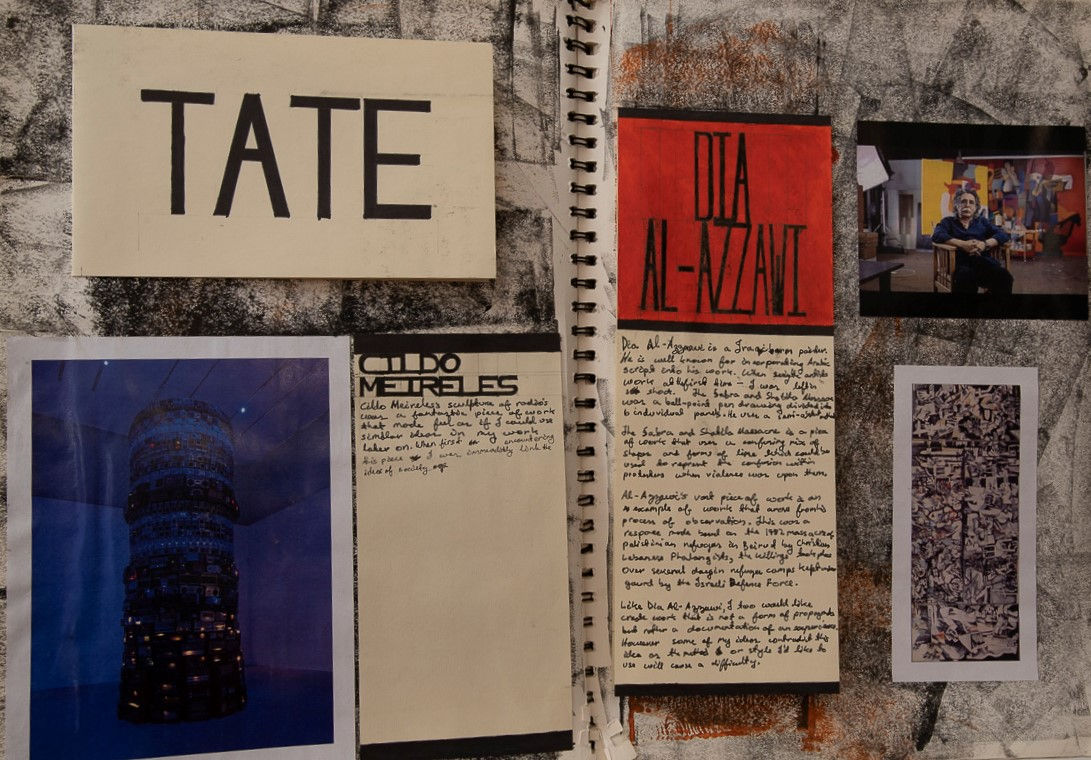
12. Tate Research Page - Dia Al-Azzawi
This research page documents my response to gallery and artist research, including work connected to Dia Al-Azzawi and Tate. I used collage, written analysis, and image placement to explore how artists respond to conflict, politics, and memory. The page helped me connect my own themes of media, identity, and social commentary to wider fine art practice.
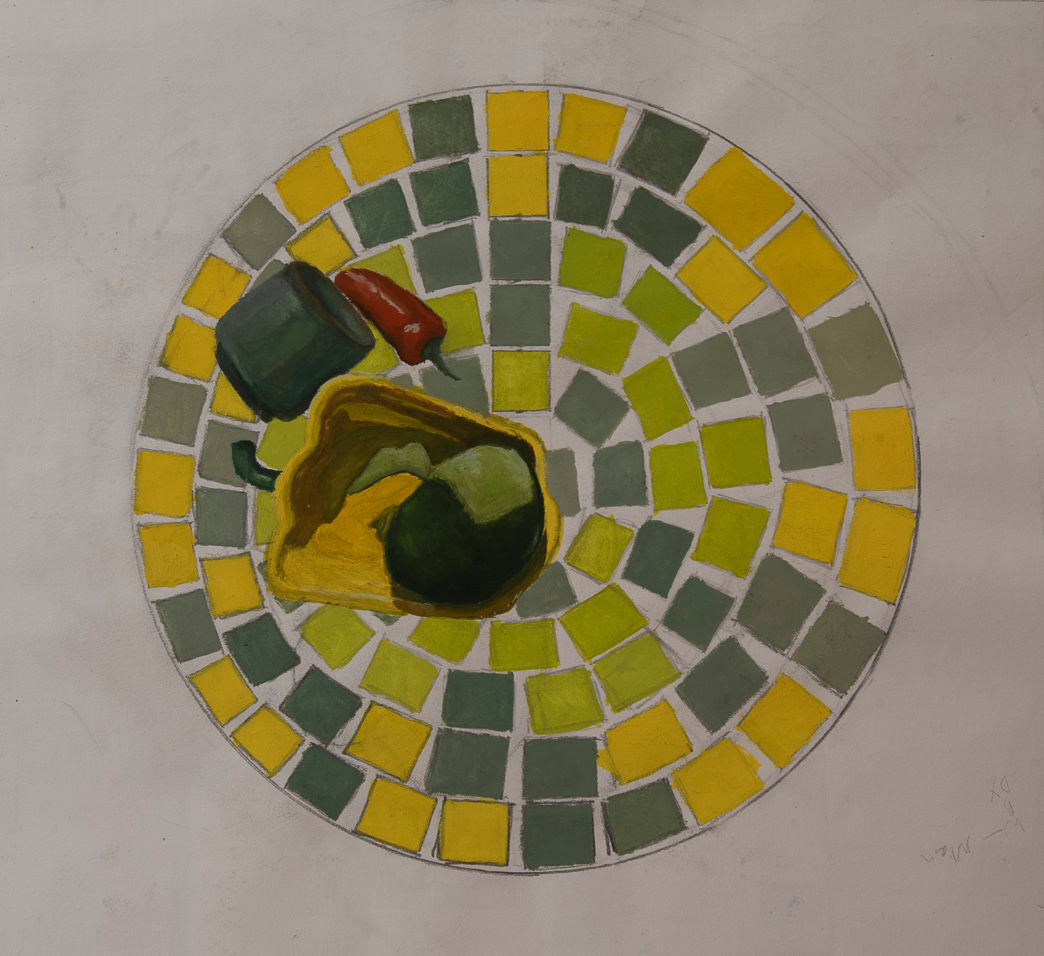
13. Still Life - Pattern and Composition Study
This still life painting explores observation, colour, and composition through a patterned circular layout. The tiled background creates movement around the objects, making the piece feel more designed and stylised. I used this study to practise shape, colour balance, and how everyday objects can become more visually interesting through arrangement.
14. Theme Development - Mind Map Studies
This double-page mind map shows the early planning stage of my project themes. I used it to break down broad ideas such as identity, politics, isolation, society, and personal experience. These pages helped me move from general topics into more focused concepts that could later become drawings, sculptures, and mixed-media pieces.
15. Still Life - Observational Painting
This still life painting focuses on light, form, and surface texture. By arranging simple objects on a plain background, I was able to study how shadows, highlights, and colour changes create depth. The piece helped me build confidence with traditional painting techniques and observational accuracy.
16. After the Crowd - Location Research
This page gathers reference images of empty urban spaces, forming part of the development for my sculpture project After the Crowd. The photographs explore the city after human activity has disappeared, focusing on absence, stillness, and atmosphere. This research helped me understand how location could influence the feeling of isolation within the final sculpture images.
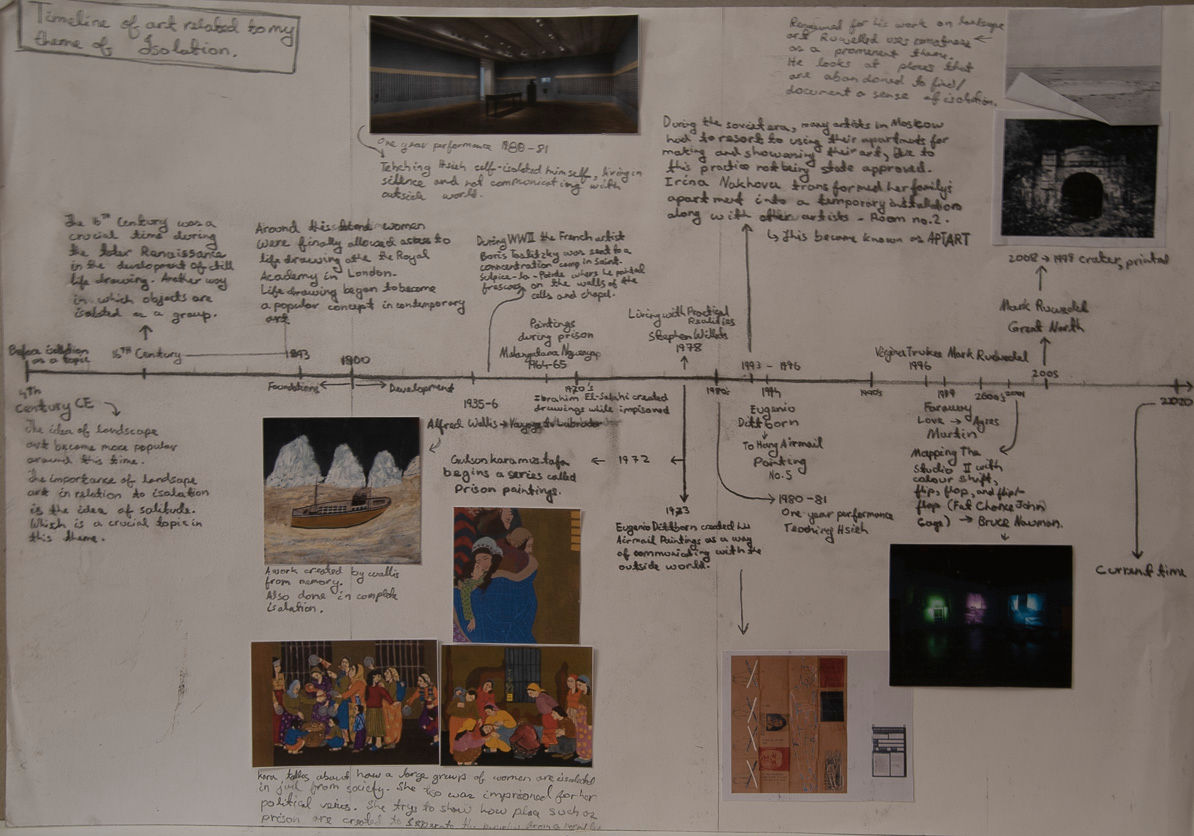
17. Tate Research Development - Artist Context
This page expands on my gallery research, combining artist analysis, written notes, and visual references. The layout allowed me to connect external influences to my own project themes, especially around politics, conflict, media, and public space. It shows how research helped shape the direction of my visual work rather than existing separately from it.
18. Coffee Landscape - Material Experiment
This page explores landscape painting using coffee as an unconventional pigment. I experimented with staining, layering, and tonal variation to create atmosphere and texture. The limited brown palette gives the work an aged, natural quality while showing how everyday materials can be used creatively in fine art.
19. After the Crowd - Sculpture Research Board
This research board shows the planning and development behind my wire sculpture project. I explored artists, locations, reference images, and written ideas around isolation, space, and the human form. The page connects to my interest in how the body changes the meaning of a place, especially during the COVID period when London felt unusually empty.
20. Surrealism - Identity and Distortion Study
This page explores surrealist ideas through portraiture, skull imagery, and distortion. The combination of realistic drawing and fragmented composition creates a connection between identity, mortality, and the inner self. I used this page to experiment with how surrealism can make a portrait feel more psychological and symbolic.
21. Figurative Drawing - Life Drawing Studies
These life drawing studies explore the human form through gesture, pose, and movement. Using chalk and quick observation, I focused on proportion, tone, and how body language can create emotion. The page helped me develop a looser and more expressive approach to figure drawing.
22. The Isolated Series - Research and Development
This board shows the research and planning behind The Isolated Series, which explored different emotional and psychological states during the COVID period. Through artist references, annotations, mind maps, and portrait research, I developed ideas around joy, greed, frustration, masking, and loneliness. This page shows how the final drawings grew from a wider investigation into isolation and identity.
23. Continuous Line Drawing - Experimental Studies
This page explores continuous line drawing as a way to loosen control and focus on movement. Through studies of objects, hands, eyes, and everyday forms, I experimented with how a single line can suggest structure, realism, and personality. The process helped me become more confident with imperfection and more aware of how line weight can shape an image.